As Europe accelerates its circular economy ambitions, regions are facing growing pressure to equip workers and SMEs with the right skills. Launched this week in Rome, the RECEBA project brings together 17 organisations across six European regions to build a long-term vocational excellence network focused on circular business innovation, micro-credentials and regional skills ecosystems.
This week in Rome, representatives from six European regions gathered to launch RECEBA, a new Erasmus+ Centre of Vocational Excellence designed to help small businesses and workers navigate the transition to a circular economy. Over the next four years, the project will bring together vocational education providers, public authorities, innovation agencies and industry partners from Lazio (Italy), Wallonia (Belgium), Normandy (France), Navarra (Spain), Friesland (Netherlands) and Bulgaria. Their shared goal is simple: make sure Europe has the skills, training and practical support needed to turn circular economy ambitions into reality.
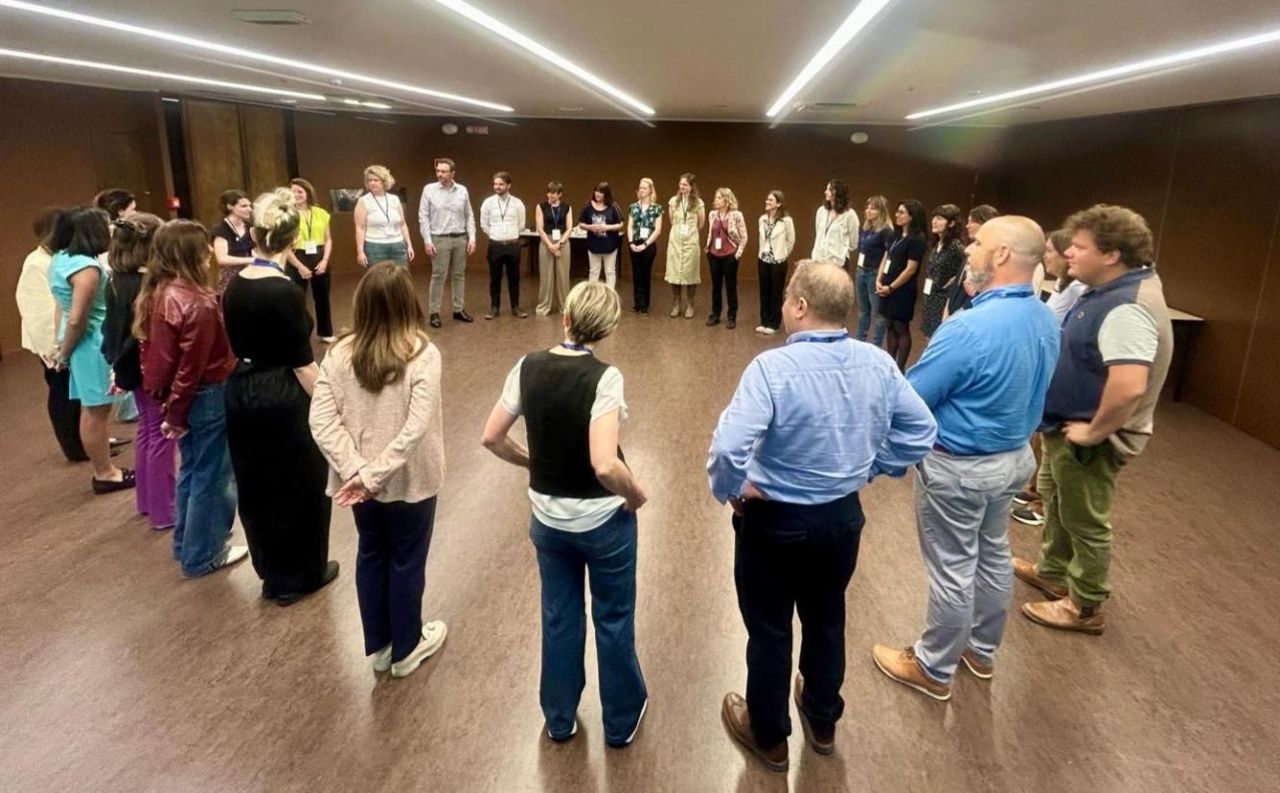
Hosted by project coordinator SFC (Sistemi Formativi Confindustria) and partner Lazio Innova, the kick-off meeting on 12–13 May brought together the 17 organisations behind the initiative for the first time.
Opening the event, SFC CEO Paola Previdi described the project as a way to connect existing regional strengths rather than start from scratch. Across Europe, regions are already investing in circular economy strategies, from Opening the event, SFC CEO Paola Previdi described the project as a way to connect existing regional strengths rather than start from scratch. Across Europe, regions are already investing in circular economy strategies, from sustainable manufacturing and reuse systems to new business models for SMEs.
RECEBA aims to reinforce these efforts by developing new training programmes, supporting worker mobility, introducing micro-credentials and creating hands-on “Circular Business Labs” built around real company challenges.
The diversity of the partnership is one of the project’s strongest assets. Regional coordinators including Lazio Innova, Orekan in Navarra, Le Forem in Wallonia, VCF in Friesland, CTBG in Bulgaria and Région Normandie will act as bridges between local businesses, training providers, innovation hubs and public institutions already active in their territories.
This project represents an opportunity for EM Normandie to strengthen the links between our Jean Monnet Chair of Excellence in Circular Economy and other European players in this field, contribute to the decarbonization of our territory, develop new applied training programs dedicated to business stakeholders, and promote a greener, more responsible and circular European economy!
The meeting also opened conversations with other European initiatives working on green and industrial transformation. Ettore Musacchi, ETRA President, shared on how the SMILE CITY Project is fostering innovative solutions for urban energy and mobility challenges; and Elena Romanini from CENTOFORM presented the EXCEED Project approach pushing students to develop green solutions starting from concrete business challenges.
On the second day, hosted at Lazio Innova’s innovation hub on Via Casilina, partners visited the Spazio Attivo FabLab, where start-ups and SMEs receive hands-on support to develop and test new ideas. For many participants, the visit offered a concrete glimpse of what RECEBA hopes to replicate across Europe: regional spaces where innovation, training and business needs meet in practice.
The first six months of the project will focus on mapping circular economy skills needs across the participating regions, setting up regional excellence panels and preparing the first training and research activities.
RECEBA is co-funded by the European Union through the Erasmus+ programme and will run from April 2026 to March 2030. Views expressed are those of the authors only.