Take a random scholarly article from a wide range of journals in management and organization research. Even if you have never read an academic paper before, you will quickly notice that many articles published in the same issue look very much the same. The title, abstract, keywords, introduction, literature review, methods, findings, discussion… Although the headings may differ slightly, they will almost always follow the same order. Moreover, if the quantitative methods are chosen, which is the gold standard for many journals, they will most likely contain conceptual models that look strikingly alike: arrows flow from ellipses or rectangles toward outcome variables, promising explanation, prediction, and theoretical contribution.
Originality, novelty, theoretical contribution, and methodological rigor are the ideals we claim to value in academic publishing. Authors, editors, reviewers, and readers all invoke these standards. Yet much published research follows the same structure, uses the same language, makes similar claims, and often feels technically polished but intellectually lifeless. Why, then, do so many papers look and sound the same? Why do academics keep publishing on the same topics over and over? Why does academic publishing continuously produce similar studies, familiar findings, and marginally incremental contributions? How can we explain the endless flow of research that appears rigorous on the surface but hollow at its core? And how did we get here?
In our latest publication1, we explain this through the idea of reproduction of form and its underlying reasons with repetition compulsion. Reproduction of form refers to the repeated copying of accepted language, structure, and style, even when the meaning behind them becomes increasingly empty. In academic publishing, what matters is not only what is said, but whether it is said in the correct form. Repetition compulsion, on the other hand, is a series of attempts to gain mastery over previous negative experiences.
What we witness with this reproduction is even beyond technical formatting. It shapes what counts as a valid argument, what kind of theory is acceptable, how contributions must be framed, and what type of critique is considered legitimate. Doctoral students and early career researchers quickly learn these rules through supervision, reviewer comments, editorial advice, and “Meet the Editor” sessions. They learn how to shape and present ideas so that they look publishable.
Instead of asking, “What needs to be said?”, scholars are often pushed to ask, “How should this be framed to get published?” Over time, academic writing eventually becomes very much detached from its purpose. The article becomes less a vehicle for thought and more a performance of acceptability.
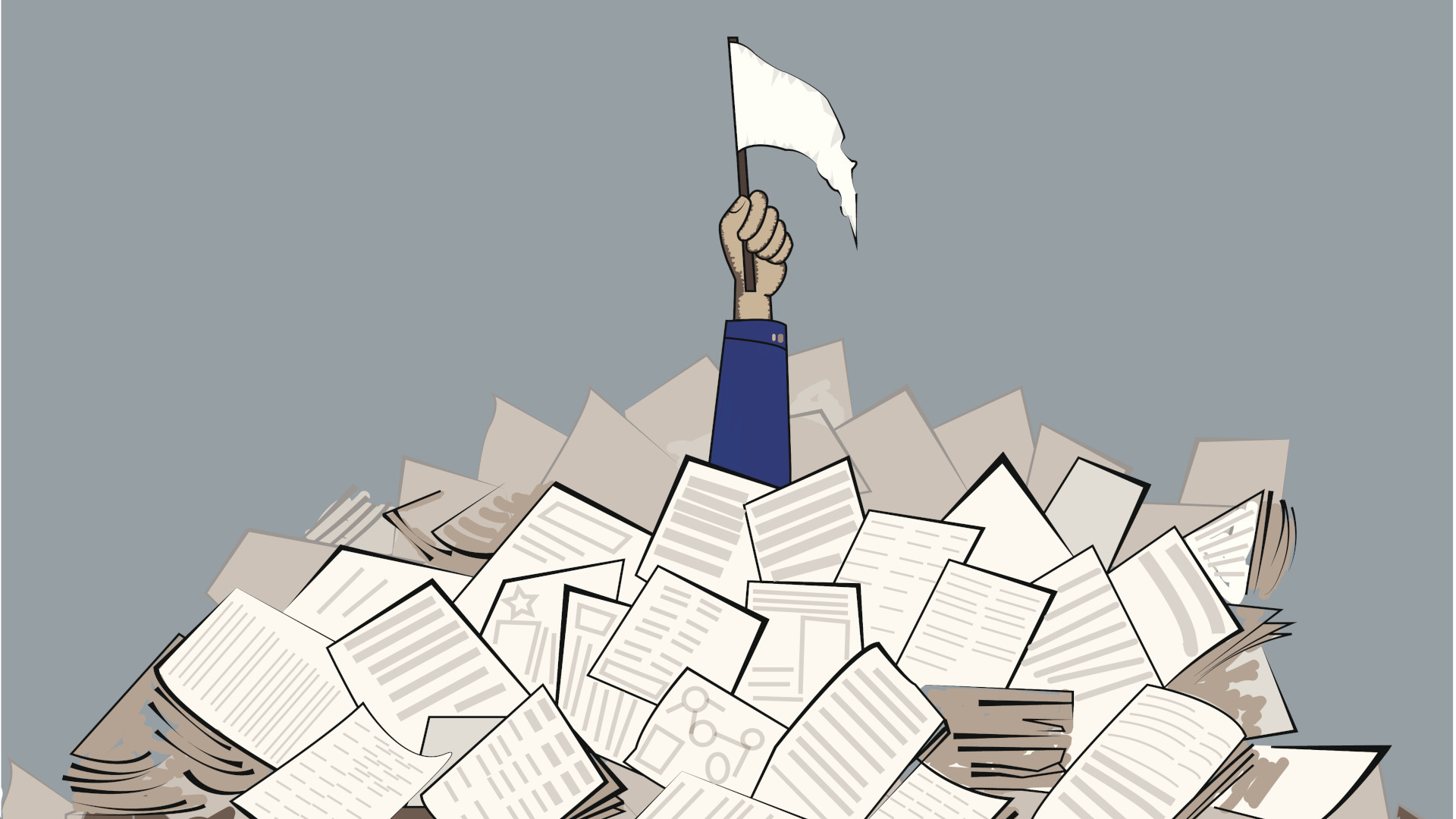
We argue that this compulsive repetition continues partly because it provides security. Publishing in familiar forms gives academics structure, recognition, and career progression. All the right set of mastery to cope with previous rejections. But this process also comes with a more serious problem: many scholars know that the publication system is no longer working as it should. It produces more papers, but not necessarily more meaningful knowledge. At the same time, it rewards productivity, but often creates alienation. The system is institutionally alive, but its deeper meaning is increasingly uncertain. Journals still publish, academics still submit, and careers are still built through publication lists. Yet the system often feels undead: moving, expanding, and reproducing itself without fully knowing why.
Academic research does not have to be meaningless. Nor should standards, structure, or rigor be completely ignored. The problem begins when form becomes more important than substance, and when expectations placed on researchers are dictated by formulaic norms of scholarly contribution. Research should clarify, provoke, disturb, challenge, and open new possibilities for thought. Thus, the real task for academics is not simply to produce more papers, but to make scholarly communication (not necessarily journal publications) meaningful again.
- An article by Matthijs BAL, Mehmet A. ORHAN, Yvonne van ROSSENBERG, and Roxana ALHNAITY. To explore the concept of reproduction of form and its consequences on research, read the article ‘Reproduction of form in Management and Organization Research: Why and how compulsively repetitive publishing kills academia’ published in Organization.